





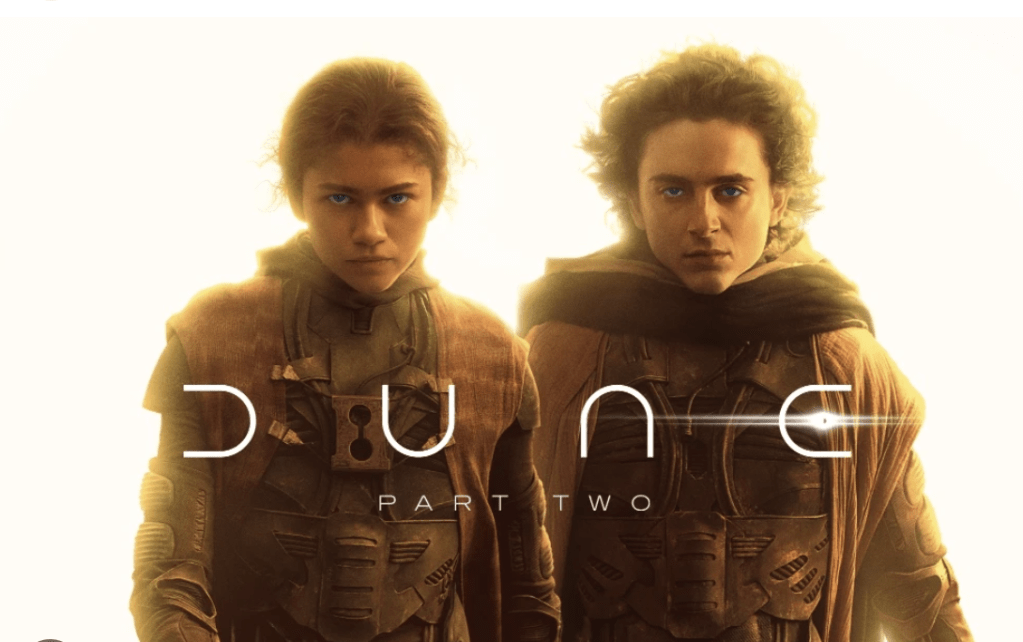
In Dune Part One, Zendaya’s character Chani declares, “this is only the beginning.” Dune Part Two is a grand showcase of spectacle and epic storytelling. The film is a symphony of sand and stakes for the Fremen on Arrakis, offering a louder, more visually stunning experience. Unlike its predecessor, the sequel infuses more humor and vulnerability, particularly from characters like Chani. While on the surface, Dune Part Two may seem like a classic hero’s journey with themes of power, politics, and ecology, it is the film’s storytelling that truly stands out.
Dune Part Two seamlessly continues the narrative from where Dune Part One left off. Following the massacre of House Atreides, Paul (Timothee Chalamet) and Lady Jessica (Rebecca Ferguson) choose to live among the Fremen. Meanwhile, House Harkonnen persists in its assault on the Fremen, intensifying the conflict and propelling Paul’s transformation from a young man to a leader.
As Paul immerses himself in the Fremen culture, he becomes known among them as the chosen one, the Lisan al Gaib, prophesied by the Bene Gesserit to be the Fremen’s savior. This revelation creates a rift in Paul’s budding romance with Chani, as she is hesitant to accept this prophecy. The unity of the Fremen hangs in the balance as they grapple with the implications of Paul’s destiny.
Princess Irulan, portrayed by Florence Pugh, has a limited presence on-screen in the film but serves a crucial role as the narrator, recounting the political intrigue and conflict from her home planet alongside her father, Emperor Shaddam IV (Christopher Walken). This narrative device helps to keep the audience engaged and invested in the plot, providing valuable context and insight into the larger political landscape of the story.
Another notable addition to the cast is the character Feyd-Rautha, portrayed by the talented Austin Butler, who plays the role of the Baron’s nephew and the latest villain. I’m already wondering if Butler will receive an Oscar nomination next year for his performance. In one scene, Princess Irulan describes him as psychotic, setting the stage for a memorable character arc.
One standout moment is a black and white sequence showcasing Feyd-Rautha in a gladiator-style battle. This scene not only serves as an impressive entrance for the character but also highlights his skills and establishes him as a formidable presence in the sequel.
The culmination of Paul and Feyd-Rautha’s conflict is a gripping and Shakespearean hand-to-hand duel, which proves to be a satisfying payoff for viewers.
Undoubtedly, the ending of Dune Part Two suggests that there will be another installment, completing the trilogy. This immersive and intricate tale of revenge, family, and sacrifice in the pursuit of destiny is poised to captivate audiences and potentially dominate the next award season.
Dune Part Two hits theaters on March 1st.
P.S. Hans Zimmer was cooking.
Pros: Exceptional world-building, outstanding acting performances, a love letter to the sci-fi genre
Cons: Introduction of many new characters without sufficient time to develop their individual stories

 WHAT THE FILM
Leave a comment